Values & History

Partager :
Institution from Le Havre since 1872 - which allows time to establish and deepen its history! -, the HAC has always embodied values proper to an industrial city, diligent in the true sense of the word: at HAC, work is done, mirroring the workers and handlers clocking in at the industrial zone, akin to that hive which is the largest port of France in terms of container numbers.

Knocked down several times over the years, HAC has always gotten back up. Just like Le Havre! Tested many times throughout history, the city was even destroyed, razed, and swept away by the bombings of September 1944: 5000 dead, 12500 buildings destroyed, tens of thousands of homeless. The city center was nothing but rubble. Sixty-one years after this cataclysm, UNESCO lists Le Havre as a World Heritage Site. An unbelievable comeback against fate.

And it is not by mere mimicry that HAC and its city share the salamander as an emblem, the symbol of Francis I, founder of Le Havre in 1517. Like the phoenix, the salamander is known in fantastic bestiary for surviving amidst flames. Better: it nurtures the good fire and extinguishes the bad, "nutrisco et extinguo" in Latin, a phrase that is none other than Le Havre's motto, sometimes inscribed on the Sky & Navy players' jerseys. The club, too, had to fight amidst flames. To exist, first, when football was unknown in France, to grow, then, by finding the grounds and men conducive to its evolution, to survive, finally, due to historical events and serious financial troubles. HAC paid a heavy price during the two world wars, climbed back among the elite, fell several times for financial reasons, and climbed the ranks again to stabilize since 1979 within the top two French divisions.

It took courage, passion, desire, and selflessness to hold on for 153 years! HAC has never had enormous financial means on a national football scale. It has always had to invent, create, and believe in itself, showing exceptional mental strength. A character it strives to instill in all its members.

With foundations long resting on youth training, notably in Le Havre, now developing gender parity by offering a large place to its women’s section, associating with cultural events to multiply bridges between universes and not remain confined to pure sports, HAC plays an essential societal role within the life of Le Havre.

Pioneering and innovative

Because being the first prompts exploration and always going further, HAC, a pioneer, has been innovating for 153 years to make the club a player anchored in modernity.

Popular and friendly

By its history and its present, Le Havre is inherently a popular city. HAC, passionately from Le Havre, has this vocation to gather as many people as possible to make its meetings moments of celebration, exchanges, and emotions.

Citizen and at the service of all

HAC acts daily to bring together around both sports and civic values by highlighting solidarity initiatives at the service of all.
 

HISTORY OF THE HAVRE ATHLETIC CLUB

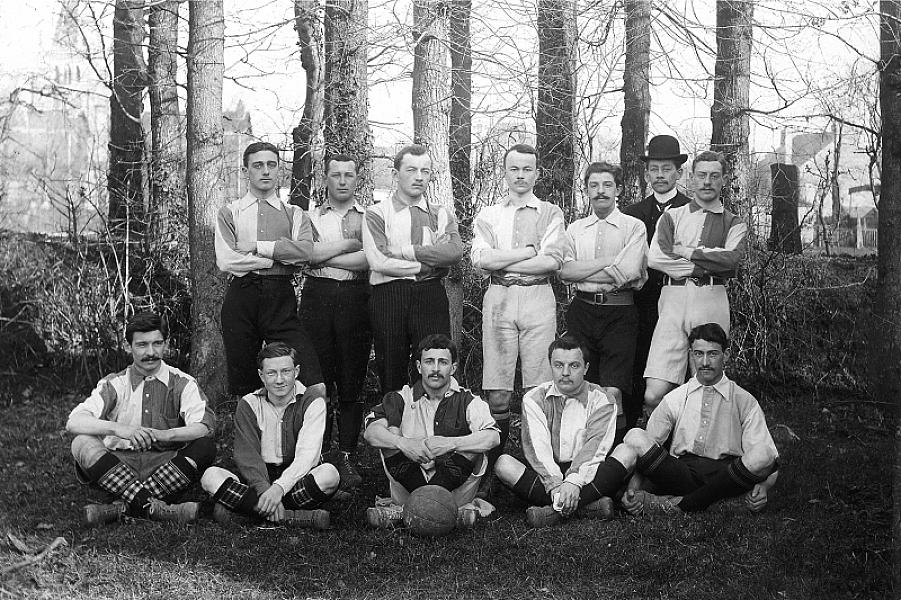
The origin of football remains obscure: China, Greece, Roman Empire, traces of "ball games" are found all over the world. However, one certainty: this game as we know it was first codified by the English in 1848 in Cambridge, and a second time in 1863, the date of the founding of the Football Association by eleven clubs, thus marking the differentiation with what would be called football-rugby at one time. Due to its proximity to the Perfidious Albion and its port and trade activities, Le Havre was naturally the ideal hosting place for this strange sport imported by the English - former students of Oxford and Cambridge – played on a wasteland located on what is now Avenue Foch, near the seafront, with a lean-to rented by a baker as a locker room, and as uniforms, white cotton blouses adorned with a blue braid on the sleeves.

This group of passionate individuals (Reverend George Washington, Reverend Orlebar, F.F. Langstaff, Gabain, Vidal, Kaiser…) actually practice the "combination", a mix of our football and rugby, much to the dismay of some. As in England, some want to play with their hands, others with their feet. This profound disagreement between supporters of football-association and football-rugby sometimes even leads to fights.

In 1872, the first match of a sport mixing football-association and football-rugby opposed the English of Le Havre to English on a stopover in the port city, members of the crews of the "Sultan" and the "Northumberland". Again, there is great confusion, some play with their feet and others with their hands to the great disinterest of the people of Le Havre who rather follow sports such as boxing or fencing.

However, the perseverance of Reverend George Washington's group is rewarded: young people from Le Havre, returning from England and having been won over by a sport they had the opportunity to practice during their stay, join the group, which then continues to grow, despite the little free time its members benefit from. Indeed, it was out of the question to play on Sundays, and, all working six days a week, as was the custom at that time, the weekly game lasted only thirty short minutes during the lunch break.

In September 1872, it is the beginning of a very long history with the creation of the Havre Football Club, the name of the future HAC, and already a first move towards Boulevard François 1st. Presided over by F.F. Langstaff, head of an important forwarding company, the Havre Football Club will inspire the creation of several clubs in France a few years later. The Paris Football Club (1879), the Club Omnisport des Girondins de Bordeaux (1881), the Racing Club de France (1882), the Stade Français (1883) are certainly more followers of football-rugby than football-association, but the movement is underway...

Palmarès
  • Championnat de France : 1899, 1900
  • Challenge international du Nord : 1900
  • Championnat de France professionnel – Division 2 / Ligue 2 : 6 titres (1938, 1959, 1985, 1991, 2008, 2023)
  • Coupe Nationale : 1918, 1919
  • Coupe de France : Vainqueur 1959 / Finaliste 1920
  • Challenge des Champions : 1959
  • Coupe Gambardella : 1989

Meilleur buteur de l'histoire du HAC
  • Jean-Michel Lesage : 76 buts (81 toutes compétitions confondues)

Palmarés de Meilleur buteur de Ligue 2 sur une saison
  • Guillaume Hoarau : 28 buts (saison 2007/2008)
  • Tino Kadewere : 20 buts (saison 2019/2020 écourtée à 28 journées en raison du Covid-19)
  • Mickaël Le Bihan : 18 buts (saison 2014/2015)
  • Kandia Traoré et Jean-Michel Lesage (co meilleurs buteurs) : 18 buts (saison 2006/2007)
  • Jean-Michel Lesage : 16 buts (saison 2005/2006)

Meilleur passeur de l'histoire de la Ligue 2
  • Zinedine Ferhat : avec 20 passes décisives lors de la saison 2017/2018, il est devenu sous le maillot du HAC le meilleur passeur en une saison de l'histoire de la Ligue 2 (égalé en 2022 par le Toulousain Van den Boomen)

Joueurs ayant disputé le plus grand nombre de matches sous le maillot havrais
  • Alexandre Bonnet (470 matches toutes compétitions confondues, dont 434 de championnat)
  • André Bihel (363 matches de championnat)
  • Jean-Pascal Fontaine (383 matches, toutes compétitions confondues, dont 346 de championnat)
  • Jean-Michel Lesage (354 matches toutes compétitions confondues, dont 319 matches de championnat)
  • Jérémy Hénin (344 matches toutes compétitions confondues, dont 314 matches de championnat)
  • Jean-Pierre Delaunay (306 matches de championnat)

Records
  • Plus large victoire: le 1er août 1953 contre le FC Sète (10-0)
  • Plus large défaite: le 23 août 1959 contre le RC Paris (9-0)
  • Plus longue série d'invincibilité en Ligue2 avec 32 matches sans défaite sur une saison (2022-2023) : 19 victoires, 13 nuls
  • Plus jeune joueur: Matthias Lepiller (FRA) 16 ans et 5 mois (le 3 décembre 2004 contre Nancy)
  • Plus vieux joueur: Jerôme Leroy (FRA) 40 ans et 2 mois (le 9 janvier 2015 contre Châteauroux)
  • Plus jeune buteur: Anthony Le Tallec (FRA) 17 ans et 17 jours (le 20 octobre 2001 contre Amiens)
  • Plus vieux buteur: Jérôme Leroy (FRA) 40 ans et 1 mois (le 19 décembre 2014 contre Tours)
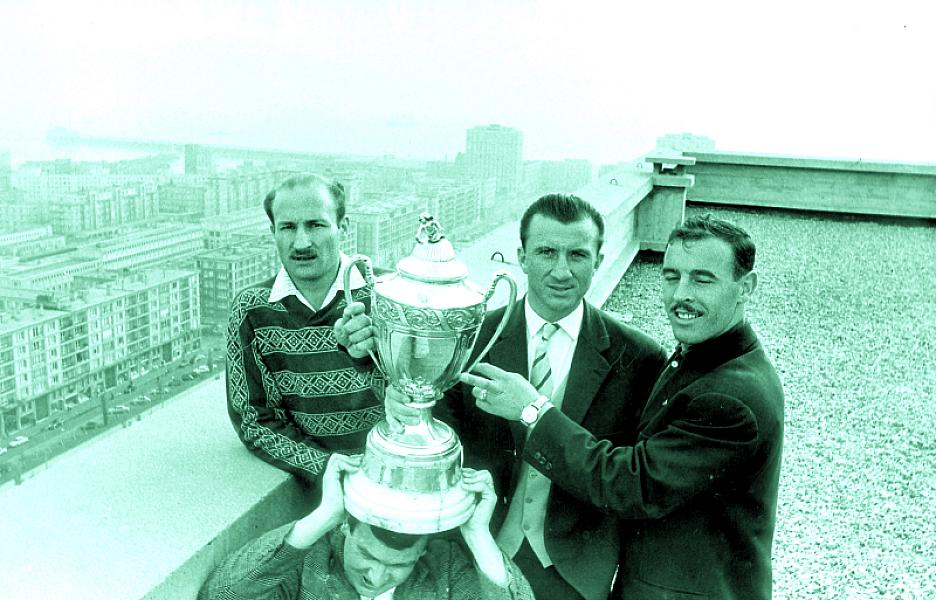
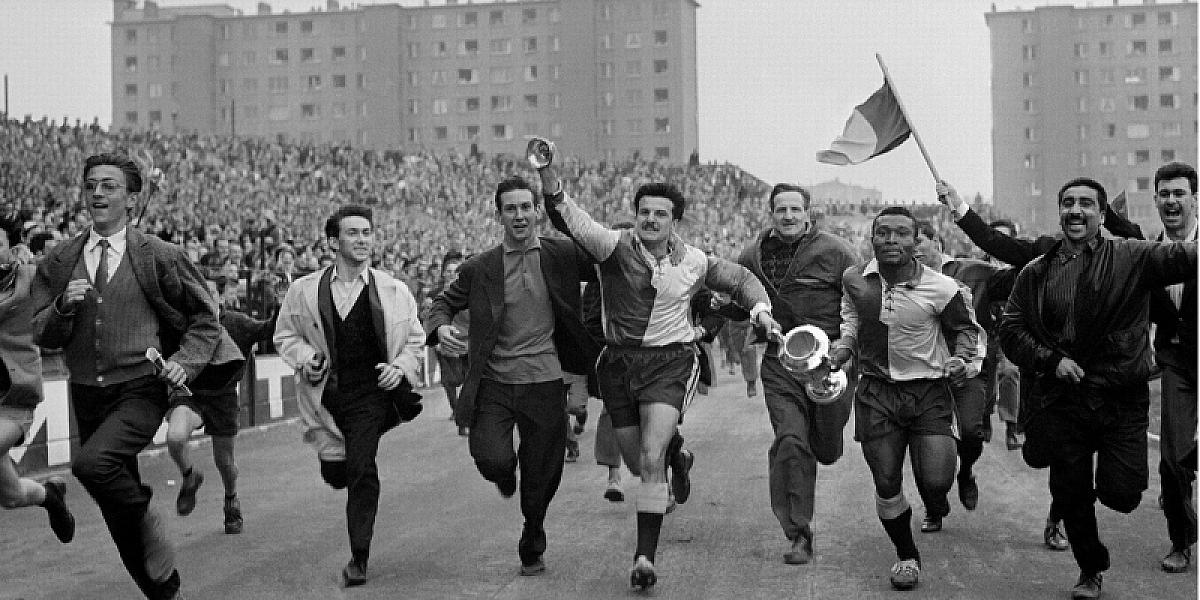
The first decade of existence will be complicated by issues with playing fields. A building is erected in the middle of the pitch on Boulevard François 1er and the Havre Football Club must then find a new location. After a trial at "La Mare aux Huguenots," located at the corner of Boulevard François 1er and Boulevard de Strasbourg, the club relocates near the canal d'Harfleur. This distance from Le Havre prevents players from easily gathering, and some members resign. Finally, a solution is found in 1882: the club settles in Sanvic, on a field located in front of the church from Rue du Cimetière (later renamed Rue Louis-Leprévost) to Rue Général-Hoche. Rented for 600 F per year, it will become the "home" of the future great HAC and will be renamed Langstaff Stadium later in 1925. Because on October 20, 1884, the Havre Football Club becomes Le Havre Athletic Club (HAC), simply because it becomes a multi-sport club. It no longer practices only "combination" but also hockey, tennis, and cricket: a rich idea of Reverend Orlebar who becomes president. Football becomes attractive again and, very quickly, two teams can be fielded at each meeting. That same year, two clubs, "Gordon FC," created by Scots, and "White Rovers," launched by Englishmen, exclusively dedicated to association football, emerge in the Paris region. This is considered the definitive breaking point between rugby-football and association football. In 1894, a legal status is conferred upon HAC by an order signed by the Prefect of Seine-Intérieure and on the advice of the mayor of Sanvic, Jules Balière. Despite this and numerous victories in friendly matches, Baron Pierre de Coubertin, secretary of the U.S.F.S.A., does not allow the club to join the newly created French championship that includes six clubs from the Paris region and remains closed to provincial teams. It is only in June of the same year that the U.S.F.S.A. recognizes the HAC. The public increasingly moves to Sanvic to attend association football matches. In front of a thousand people, on February 14, 1896, the HAC defeats 4-0 in a friendly match against the reigning French champion, Standard A.C. Given this growing interest, the press closely observes the excursions of the Havre club. Thus, on February 23, 1897, the first proper report of an HAC match appears in "Petit-Havre." The HAC very logically takes being excluded from the French championship matches poorly. They even offer three times to come at their own expense to the capital, but only receive refusals, like the one expressed by the leaders of Club Français, another Parisian team, contacted by the Sky and Navy as early as 1896 to organize a confrontation between the two clubs. The Havrais are just tolerated in 1897 in the Manier Cup, a competition created by the president of Paris Star, but they are not allowed to play with more than three foreigners. Therefore, they must do without most of their English starters and leave the trophy to Club Français (5-3 defeat in the final). The U.S.F.S.A. gradually reconsiders its position and sensibly declares that there cannot be a national title without opening to the provinces. Only the Iris Club Lillois and the HAC declare themselves and must face each other in a kind of semi-final, the winner of which will meet Club Français. But this "semi-final" will never take place. Scheduled to take place at the brand-new Parc des Princes, it cannot be played... due to the lack of a ball! And when the indispensable accessory is finally found, the field is no longer available! The match is postponed to Amiens a few days later, but the Lillois forfeit due to an influenza epidemic. The HAC is then qualified... And Club Français refuses to face them, arguing that this opponent is not representative. Faced with this unsportsmanlike attitude, the HAC, which had traveled to Paris, is crowned French champion 1899 by the U.S.F.S.A.... without having played! On April 23, 1900, the HAC wins the Challenge International du Nord (created by S.C. Tourcoing) by beating Club Français in the final after extra time 3 to 2. And, a few days later, on May 7, the Havrais are once again French champions, dominating their favorite adversaries, Club Français, 1 to 0! In 1901, the HAC will not clinch its third consecutive title but will still be finalists against Standard. The year 1902 is marked by major internal problems. Some "footballers" are also "rugby players" depending on their mood and whim, and the two teams must share the same field. Thus, dissatisfied, prominent footballers leave HAC, like French champion captain Frank Mason, and found the Havre Sports Club, which settles in Bléville, which will later give rise to epic derbies. The decline in results at the national level, following this defection and the fact that some players continue both football and rugby activities without specializing leads to the adoption of the principle of moral and financial autonomy for each HAC section under the control of the board of directors at the general meeting on May 12, 1905. Thus are born HAC Rugby, HAC Football, HAC Tennis, HAC Hockey, and HAC Athletics. Mr. Albert Schadegg becomes the first president of the autonomous football association section. Football is gradually imposing itself on the world. FIFA, Fédération Internationale de Football Association, created the previous year, in 1904, and sharing the premises of the U.S.F.S.A., takes its first steps, gets structured, sees more and more countries joining it. Football no longer stammers, it imposes itself. The HAC continues its journey, despite World War I which claims 50 Hacmen. It is during these atrocities that the club's new home is built: the stade de la Cavée-Verte! Land bought from the Dollfus family, it is laid out by war prisoners and inaugurated on December 23, 1917, by a match between the HAC and the Belgian national team, a prelude to a Christmas tournament also including the Belgian garrison team and that of Harfleur FC. Still standing, in 1920, the HAC even plays in the final of the very young Coupe de France, having to concede, in the absence of its captain, Albert Rénier, 2-1 to CA Paris. Football evolves. Globally, of course, with its presence at the Olympic Games, then the creation by Frenchman Jules Rimet, of the World Cup, whose first edition takes place in 1930. In France, much later compared to some neighboring countries (1932), professionalism takes hold. At HAC, there is much debate: should the movement be followed? The decision is made the following year at the General Assembly: in 1933, the club adopts this new status. At the end of the thirties, in 1938, the HAC clinches its first title of Second Division champion. Unfortunately, World War II brutally ends the Sky and Navy's ambitions after a first season among the elite. Struck hard physically and morally, like the entire city of Le Havre, the HAC gradually rises from its ashes. Relating to the phoenix, the salamander is the adequate emblem of the club and the city. In 1950, it is the return to the First Division, under the impetus of Ruminski, Saunier, the Bihel brothers... It is during this season, on April 23, face to Nîmes, that a record is set for spectators at the Cavée-Verte: 24,961 spectators! And, a year later, the Sky and Navy complete the season in a superb third place, which remains to this day the club's best performance among the elite. The HAC then descends, narrowly escapes collapse, saved in 1956 by an appeal to the public from the presenter Pierre Bellemare in his program "Vous êtes formidables" on Europe 1. Three years later, the oldest in French football is more vigorous than ever, writing then one of the most beautiful pages of its history. Indeed, at the end of the 1958-59 season, the HAC is again Champion of France of Second Division. But there's more! Although facing a team playing in First Division, Sochaux, it wins a superb Coupe de France at the end of two epic matches! The first, on May 3, 1959, in Colombes, under the eyes of General de Gaulle, ends with the score of 2 to 2. This final is replayed fifteen days later and, this time, André Strappe and his team make short work of the Sochaliens: 3-0! But, in the medium term, history repeats itself: the HAC descends in 1962, then, undermined by financial problems, relinquishes professionalism in 1964. Supported by a handful of goodwill, the club then competes in the Division d'Honneur, far from its former glory. The restructuring of championships offers the HAC the possibility of competing in the Second Division (70-71), then in the Third division from 1971. There's better to celebrate a centenary! But, under the impetus, from 1974, of President Marilly and his team of leaders, the club climbs back in 1979, the year of passing the torch to Jean-Pierre Hureau. He has one goal: to restore the glory! Supported by Alain Belsoeur, he accomplishes it perfectly. In 1981, the HAC regains professional status. And the First Division on May 11, 1985, at the end of a fantastic match against Mulhouse, second in the standings, a sort of championship final in a jubilant Jules-Deschaseaux stadium, packed to the brim, which burst with happiness at the goal from the Havre-born Pascal Pain. Until 2000, except for three seasons of interruption (1988-91), the HAC is a First Division club. Meanwhile, it equips itself with an efficient training center, inaugurated in 1984. Between 2000 and 2023, the club experiences only two seasons among the elite (2002-03 and 2008-09). Yet it has solid structures, one of the most beautiful stadiums in France, the Stade Océane (25,000 seats, which succeeded the Jules-Deschaseaux stadium in 2012), and its training is recognized internationally, with many players from the Cavée-Verte playing at the European level. In June 2022, Vincent Volpe, majority shareholder since 2015, brings in Jean-Michel Roussier, to whom he hands over the club presidency. Roussier arrives with Mathieu Bodmer, new sports director, accompanied by Mohamed El Kharraze and Julien Momont. A year later, success is already there: on June 2, 2023, after a victory against Dijon (1-0) in a Stade Océane filled with joy, the HAC returns to the French elite, clinching along the way its sixth Second Division championship title, a record. Since then, the Hacmen have strung together two stays in Ligue 1 imbued with the values embodied by the club since its inception: combat and solidarity. In June 2025, Vincent Volpe sells the shares of his company owning the HAC: the majority shareholder of the club is now Blue Crow Sports Group, represented by its CEO, Jeff Luhnow.
Pioneer Because being the first encourages exploration, to always go further, HAC, the oldest football club in France, has been innovating since 1872 to make the club a player rooted in modernity. Popular Due to its history and present, Le Havre is an inherently popular city. HAC, passionately from Le Havre, aims to bring as many people together as possible to make its events moments of celebration, exchange, and emotion. Citizen HAC acts daily to unite around both sporting and civic values by highlighting solidarity initiatives that serve everyone.
— Nos Valeurs
Not just building a team, but building a club.
— Jean-Pierre Hureau
Our Values
Our Values
Pioneer Because being the first encourages exploration and venturing further, HAC, the oldest French football club, has been innovating since 1872 to make the club a modern presence. Popular Due to its history and present, Le Havre is a city that is inherently popular. HAC, passionately from Le Havre, has the mission to bring together as many people as possible to make its events moments of celebration, exchange, and emotion. Citizen HAC acts daily to unite around both sporting and civic values by highlighting solidarity initiatives that serve everyone.